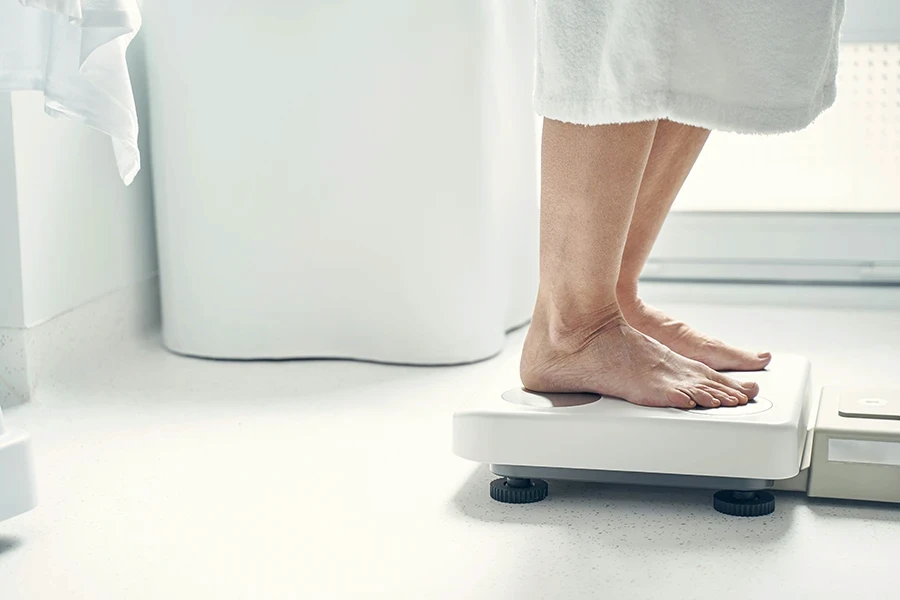
We hear this almost every day. Maybe you recognise it yourself. You eat healthily, try to exercise regularly and pay attention to your lifestyle. Yet you notice your body changing. Your trousers feel tighter, fat seems to gather mainly around your stomach, and losing weight suddenly takes much more effort than it used to.
That can be incredibly frustrating. Especially when you feel you're doing everything that has always worked.
The good news is that you're not imagining it. A lot changes in your body during perimenopause. These changes affect your metabolism, body composition and hormones. That doesn't mean weight gain is inevitable, but your body often does need a different approach.
Your body changes, even if your lifestyle stays the same
Most women associate perimenopause with hot flushes or irregular periods. Yet much more is going on.
Your hormone levels start to fluctuate. Your oestrogen and progesterone levels in particular change significantly, and your testosterone level also changes gradually. At the same time, your body slowly loses muscle mass. This is a normal part of ageing.
Muscles use a lot of energy, even when you're at rest. So when your muscle mass decreases, your body also burns fewer calories. This means the same diet that used to be just right can now gradually lead to weight gain.
The difference may seem small, but over months or years it can become noticeable.
Why does your stomach in particular change?
Many women tell us not only that they're gaining weight, but above all that their body feels different. Where fat used to settle mainly on the hips or legs, it now seems to gather more around the stomach.
There's an explanation for this too.
During the reproductive years, oestrogen promotes fat storage on the hips and thighs. As oestrogen levels decline, that pattern gradually changes. The body stores relatively more fat in the abdominal cavity, around the organs. This is called visceral fat.
The changing balance between oestrogen, progesterone and testosterone also contributes to this shift.
Not every woman develops a lot of belly fat, but many women do recognise that their body takes on a different shape during perimenopause.
Why strict dieting often backfires
When the number on the scales goes up, many women choose to eat less. That sounds logical, but it doesn't always deliver the result they want.
Perimenopause often coincides with a busy time in life. You're combining work with a family, caring for others or other responsibilities. Your body already has a lot to process.
Adding a strict diet on top of that often increases the strain even further. Many women can't keep up such a diet for long, get hungrier or feel increasingly tired.
That's exactly why a sustainable change usually works better than a temporary diet.
Stress has more influence than you might think
Stress plays a bigger role in weight than many people realise.
During perimenopause, many women go through a period where everything seems to happen at once. Work demands a lot of energy, children are growing up, parents may need more care, and meanwhile your own body is changing.
All these factors place demands on your stress system.
When you have little room to recover for a long time, you often notice it in more than just your energy. You get hungry more often, find it harder to get moving and sometimes make different food choices than you'd actually like to.
This isn't about a lack of discipline. Your body is constantly trying to adapt to the circumstances it finds itself in.
Don't underestimate the influence of sleep
Many women sleep less well during perimenopause. They're woken by hot flushes, lie awake worrying or sleep less deeply than before.
Poor sleep does more than just make you tired.
After a short or restless night, you often feel hungrier, exercise takes more effort and it becomes harder to make healthy choices. If that happens occasionally, it's not a problem. But if you sleep badly for months, it does affect your health and, ultimately, your weight.
So what does help?
The solution usually isn't eating even less, but supporting your body.
Strength training, for example, helps preserve muscle mass, which also supports your metabolism. A protein-rich diet contributes to maintaining muscle and often keeps you feeling full for longer.
Getting enough sleep, regular exercise and moments of relaxation also make a surprisingly big difference. Not because they deliver quick results, but because they help your body recover better.
So try not to focus only on the scales.
Instead, ask yourself: do I have enough energy? Do I feel stronger? Am I sleeping better? Can I move more easily? These are at least as important signs of health.
The key message
Perimenopause changes the way your body handles energy. Your hormones change, your muscle mass gradually decreases, and stress and sleep often have a greater influence on your weight.
That doesn't mean losing weight becomes impossible. It does mean your body needs a different approach than it did ten or twenty years ago.
That's why at Flouria we look beyond calories or the scales. We look at the bigger picture. Because it's when hormones, lifestyle and recovery come back into better balance that there's room to feel fitter, more energetic and stronger again.
Latest posts



See all


The latest handpicked blog articles