Postpartum Hormone Therapy: Could It Help You Feel Like Yourself Again?
Not everyone automatically feels like themselves again after giving birth. Read how hormonal changes can be linked to postpartum complaints.

When most people hear "hormone therapy," they think of menopause. But the truth is that some of the biggest hormonal shifts a woman ever experiences happen during pregnancy and in the months after giving birth. For some women, those shifts settle on their own. For others, the symptoms linger long after the newborn fog should have lifted.
The hard part is knowing the difference. Are my symptoms a normal part of adjusting to life with a new baby, or is something going on that deserves support?
Why pregnancy and childbirth affect your hormones so dramatically
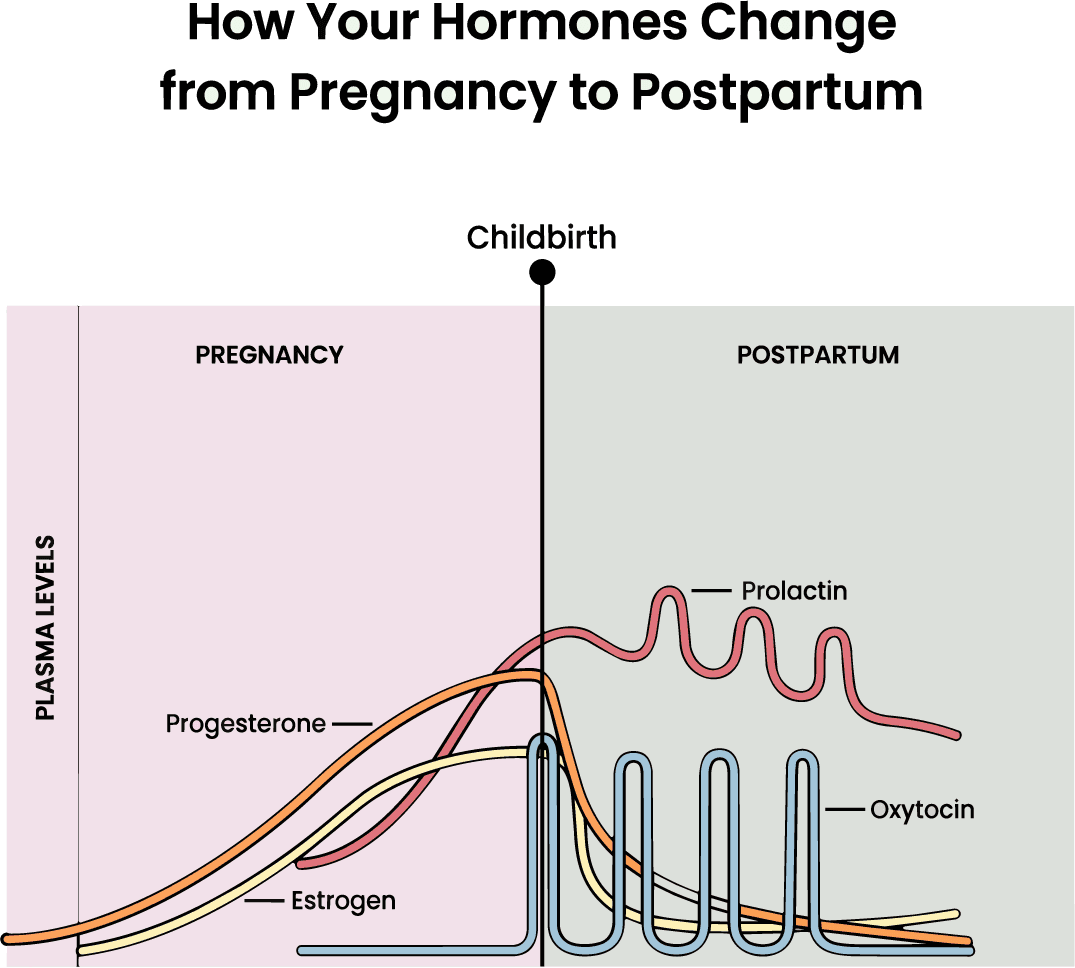
During pregnancy, a crescendo of hormonal changes occur to support your baby’s growth and prepare your body for labour. That hormonal recipe then drops dramatically immediately after childbirth, to levels comparable to post-menopause. It is one of the fastest hormonal changes the human body ever goes through. This can understandably lead to symptoms like mood swings, fatigue, and more.
Add breastfeeding, disrupted sleep, and a recovering thyroid into the mix, and it's easy to see why so many women don't feel like themselves for a while.
What exactly happens?
📉 Estrogen and progesterone: These two hormones soar during your first trimester of pregnancy, level out during the second, and eventually peak in your third trimester. They then fall precipitously after birth. This can contribute to major mood changes and fatigue postpartum.
🤍 Oxytocin: Also known as the "bonding hormone," this hormone surges during childbirth and helps the body release milk during breastfeeding.
🍼 Prolactin: This hormone kicks into high gear during pregnancy and continues to spike with the production of colostrum and breastmilk.
😵💫 Cortisol: Pregnancy leads to a marked rise in cortisol levels, which peak in the third trimester and typically fall post-placenta delivery. That said, cortisol can tend to stay elevated from pre-pregnancy levels in the months following birth and higher cortisol levels are associated with postpartum stress and mood challenges.
For most, the body gradually finds its rhythm again. But when symptoms stick around past the first several months, it's worth paying closer attention rather than simply pushing through.
Signs your symptoms may be more than "just the newborn phase"
Hormone therapy may be worth exploring with a clinician if, around six months postpartum or longer, you're still dealing with symptoms such as:
Trouble sleeping, even on the nights your children sleep through
Constant tension, you can't seem to truly relax
Heightened anger, anxiety, or panic, that even escalates into conflicts with your partner, family or colleagues
Feeling easily overstimulated, for example in traffic or crowded places
Brain fog you keep brushing off as "baby brain"
Waking up exhausted despite a full night's rest, feeling flat or low
Feeling these symptoms does not mean you're doing anything wrong. It simply means your body may still be recalibrating, and that's worth taking seriously. You don’t need to wait until next month to see if it will fix itself, there are treatment options available.
Connect your symptoms to your cycle
Once your menstrual cycle returns, the timing of your symptoms can reveal a lot. The goal is to notice patterns rather than judge any single bad day.
For example: do your irritability and tension tend to ramp up in the second half of your cycle, the week or so before your period? That pattern can point toward a sensitivity to the natural rise and fall of progesterone, and it's exactly the kind of detail that helps a clinician decide whether hormonal support, such as cyclical progesterone, might help.
Other women notice their low moods or fatigue cluster at different points. There's no single "right" pattern; what matters is the information, because it turns a vague "I just don't feel right" into something specific a healthcare provider can actually work with.
A cycle tracker is the simplest way to start gathering that picture. The tracker built into the Flouria app lets you log symptoms alongside your cycle, so that by the time you speak with a clinician, you arrive with weeks of real data instead of trying to remember how you felt.
Hormone therapy: when is it right for me?
It's worth saying clearly: hormone therapy is not a quick fix you can prescribe yourself, and it isn't right for everyone. Depending on your symptoms, history, and goals, the right support may involve progesterone, a thyroid check, or something else entirely. Or, it might not involve hormones at all. That's a conversation to have with a qualified doctor who can look at the full picture.
What may help
Body-identical progesterone. Often the first treatment considered, this works via natural pathways in the brain to support sleep, calm the nervous system, and reduce anxiety. It can be especially helpful if your cycle has returned but ovulation is irregular.
Transdermal oestrogen. A patch or gel applied to the skin. May be considered for mood, cognitive symptoms, joint pain, or early waking. Usually combined with progesterone when the uterus is present.
Vaginal oestrogen. A locally applied cream for dryness, discomfort, or urinary symptoms. Safe during breastfeeding with minimal systemic absorption.
Thyroid, iron & vitamin support. Postpartum thyroiditis and low iron or vitamin D are common and often missed in standard postpartum care. These should be tested and treated if deficiencies show.
When to reach out for help
Some of the symptoms above, particularly persistent anxiety, panic, deep low mood, or anger that feels hard to control, can also be signs of postpartum depression or a postpartum anxiety disorder. These are common, treatable, and absolutely not a reflection of your strength as a parent. You don't need to wait six months or tie anything to your cycle. If these feelings are weighing on you, please reach out to a healthcare provider now.
If you ever have thoughts of harming yourself or your baby, treat it as urgent and contact your doctor or local emergency services straight away.
How Flouria can help
You know your body better than anyone, and you deserve more than to be told it's "just hormones" or "just the baby phase." At Flouria, we help women make sense of what they're experiencing and connect the dots between symptoms, cycle, and the right next step.
Our postpartum care path supports you in this way:
Plan a no-commitment intake. A nurse practitioner can help you evaluate if Flouria for Postpartum is the right fit for you.
Start tracking. Use the cycle tracker in the Flouria app to log your symptoms for a few weeks. Notice whether certain symptoms cluster at particular points in your cycle.
Testing. We do a full blood and hormone panel including oestrogen, thyroid, iron, vitamin D, and B12 to ensure we have the full picture.
Talk it through. Book a consultation with a specialised Flouria doctor to review your results and explore whether hormone therapy or another approach makes sense for you.
Treatment & prescriptions. Every woman’s treatment plan looks different, there is no one-size-fits-all. If hormone therapy or other prescriptions are part of your plan, they will be sent conveniently to your home via our pharmacy partner.
Ongoing support. We don’t “launch and leave.” With Flouria, you will have follow-up consultations with the same doctor and can chat with your care team via the app.
Recovering from the hormonal upheaval of pregnancy takes time, and you don't have to figure it out alone. If you believe Flouria can help you, we warmly invite you to plan an intake.
This article is for general information and isn't a substitute for personalised medical advice. Always consult a qualified healthcare provider about your symptoms and any treatment.
When most people hear "hormone therapy," they think of menopause. But the truth is that some of the biggest hormonal shifts a woman ever experiences happen during pregnancy and in the months after giving birth. For some women, those shifts settle on their own. For others, the symptoms linger long after the newborn fog should have lifted.
The hard part is knowing the difference. Are my symptoms a normal part of adjusting to life with a new baby, or is something going on that deserves support?
Why pregnancy and childbirth affect your hormones so dramatically
During pregnancy, a crescendo of hormonal changes occur to support your baby’s growth and prepare your body for labour. That hormonal recipe then drops dramatically immediately after childbirth, to levels comparable to post-menopause. It is one of the fastest hormonal changes the human body ever goes through. This can understandably lead to symptoms like mood swings, fatigue, and more.
Add breastfeeding, disrupted sleep, and a recovering thyroid into the mix, and it's easy to see why so many women don't feel like themselves for a while.

What exactly happens?
📉 Estrogen and progesterone: These two hormones soar during your first trimester of pregnancy, level out during the second, and eventually peak in your third trimester. They then fall precipitously after birth. This can contribute to major mood changes and fatigue postpartum.
🤍 Oxytocin: Also known as the "bonding hormone," this hormone surges during childbirth and helps the body release milk during breastfeeding.
🍼 Prolactin: This hormone kicks into high gear during pregnancy and continues to spike with the production of colostrum and breastmilk.
😵💫 Cortisol: Pregnancy leads to a marked rise in cortisol levels, which peak in the third trimester and typically fall post-placenta delivery. That said, cortisol can tend to stay elevated from pre-pregnancy levels in the months following birth and higher cortisol levels are associated with postpartum stress and mood challenges.
For most, the body gradually finds its rhythm again. But when symptoms stick around past the first several months, it's worth paying closer attention rather than simply pushing through.
Signs your symptoms may be more than "just the newborn phase"
Hormone therapy may be worth exploring with a clinician if, around six months postpartum or longer, you're still dealing with symptoms such as:
Trouble sleeping, even on the nights your children sleep through
Constant tension, you can't seem to truly relax
Heightened anger, anxiety, or panic, that even escalates into conflicts with your partner, family or colleagues
Feeling easily overstimulated, for example in traffic or crowded places
Brain fog you keep brushing off as "baby brain"
Waking up exhausted despite a full night's rest, feeling flat or low
Feeling these symptoms does not mean you're doing anything wrong. It simply means your body may still be recalibrating, and that's worth taking seriously. You don’t need to wait until next month to see if it will fix itself, there are treatment options available.
Connect your symptoms to your cycle
Once your menstrual cycle returns, the timing of your symptoms can reveal a lot. The goal is to notice patterns rather than judge any single bad day.
For example: do your irritability and tension tend to ramp up in the second half of your cycle, the week or so before your period? That pattern can point toward a sensitivity to the natural rise and fall of progesterone, and it's exactly the kind of detail that helps a clinician decide whether hormonal support, such as cyclical progesterone, might help.
Other women notice their low moods or fatigue cluster at different points. There's no single "right" pattern; what matters is the information, because it turns a vague "I just don't feel right" into something specific a healthcare provider can actually work with.
A cycle tracker is the simplest way to start gathering that picture. The tracker built into the Flouria app lets you log symptoms alongside your cycle, so that by the time you speak with a clinician, you arrive with weeks of real data instead of trying to remember how you felt.
Hormone therapy: when is it right for me?
It's worth saying clearly: hormone therapy is not a quick fix you can prescribe yourself, and it isn't right for everyone. Depending on your symptoms, history, and goals, the right support may involve progesterone, a thyroid check, or something else entirely. Or, it might not involve hormones at all. That's a conversation to have with a qualified doctor who can look at the full picture.
What may help
Body-identical progesterone. Often the first treatment considered, this works via natural pathways in the brain to support sleep, calm the nervous system, and reduce anxiety. It can be especially helpful if your cycle has returned but ovulation is irregular.
Transdermal oestrogen. A patch or gel applied to the skin. May be considered for mood, cognitive symptoms, joint pain, or early waking. Usually combined with progesterone when the uterus is present.
Vaginal oestrogen. A locally applied cream for dryness, discomfort, or urinary symptoms. Safe during breastfeeding with minimal systemic absorption.
Thyroid, iron & vitamin support. Postpartum thyroiditis and low iron or vitamin D are common and often missed in standard postpartum care. These should be tested and treated if deficiencies show.
When to reach out for help
Some of the symptoms above, particularly persistent anxiety, panic, deep low mood, or anger that feels hard to control, can also be signs of postpartum depression or a postpartum anxiety disorder. These are common, treatable, and absolutely not a reflection of your strength as a parent. You don't need to wait six months or tie anything to your cycle. If these feelings are weighing on you, please reach out to a healthcare provider now.
If you ever have thoughts of harming yourself or your baby, treat it as urgent and contact your doctor or local emergency services straight away.
How Flouria can help
You know your body better than anyone, and you deserve more than to be told it's "just hormones" or "just the baby phase." At Flouria, we help women make sense of what they're experiencing and connect the dots between symptoms, cycle, and the right next step.
Our postpartum care path supports you in this way:
Plan a no-commitment intake. A nurse practitioner can help you evaluate if Flouria for Postpartum is the right fit for you.
Start tracking. Use the cycle tracker in the Flouria app to log your symptoms for a few weeks. Notice whether certain symptoms cluster at particular points in your cycle.
Testing. We do a full blood and hormone panel including oestrogen, thyroid, iron, vitamin D, and B12 to ensure we have the full picture.
Talk it through. Book a consultation with a specialised Flouria doctor to review your results and explore whether hormone therapy or another approach makes sense for you.
Treatment & prescriptions. Every woman’s treatment plan looks different, there is no one-size-fits-all. If hormone therapy or other prescriptions are part of your plan, they will be sent conveniently to your home via our pharmacy partner.
Ongoing support. We don’t “launch and leave.” With Flouria, you will have follow-up consultations with the same doctor and can chat with your care team via the app.
Recovering from the hormonal upheaval of pregnancy takes time, and you don't have to figure it out alone. If you believe Flouria can help you, we warmly invite you to plan an intake.
This article is for general information and isn't a substitute for personalised medical advice. Always consult a qualified healthcare provider about your symptoms and any treatment.
NO COMMITMENT REQUIRED
Ready to
feel heard?
We are here for you. Plan your free intake to get started and discover if Flouria is right for you.

The care path with Flouria feels like a gift to myself.
Flouria client, 44 years old, The Netherlands
NO COMMITMENT REQUIRED
Ready to
feel heard?
We are here for you. Plan your free intake to get started and discover if Flouria is right for you.

The care path with Flouria feels like a gift to myself.
Flouria client, 44 years old, The Netherlands
NO COMMITMENT REQUIRED
Ready to
feel heard?
We are here for you. Plan your free intake to get started and discover if Flouria is right for you.

The care path with Flouria feels like a gift to myself.
Flouria client, 44 years old, The Netherlands
Continue Reading
Continue Reading
The latest handpicked blog articles
NO COMMITMENT REQUIRED
Ready to
feel heard?
We are here for you. Plan your free intake to get started and discover if Flouria is right for you.